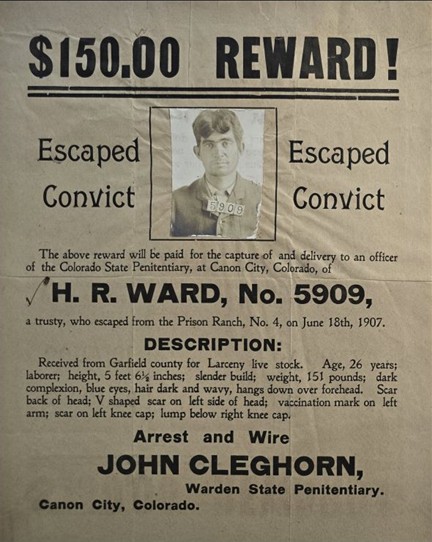
I love ephemera. If you don’t know what that is, Merriam-Webster.com provides this definition: “items (such as posters, broadsides, and tickets) originally meant to be discarded after use but that later become collectibles.”
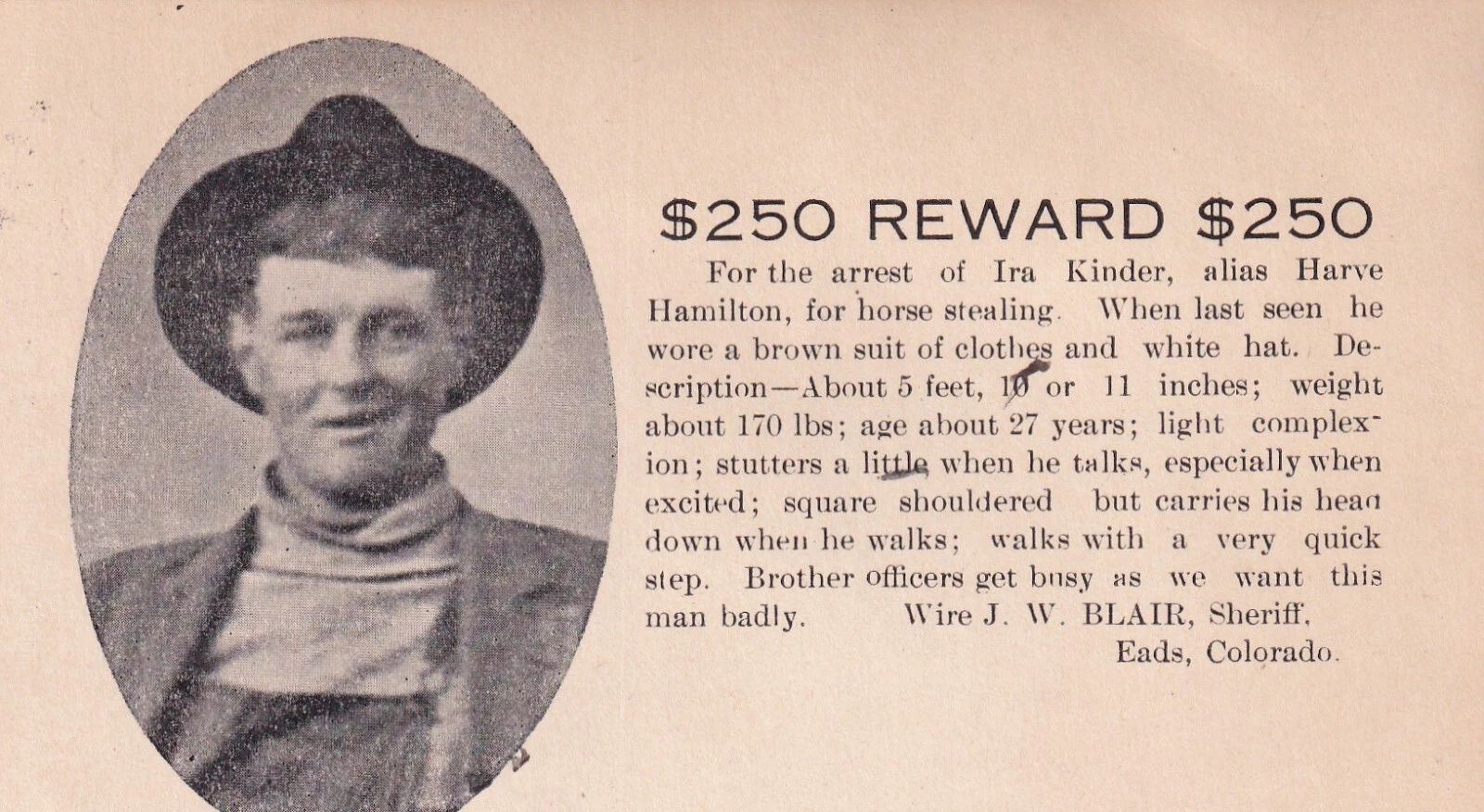
One thing I love about ephemera is that you can collect it specifically—say, Old West wanted posters and postcards, the subject of an earlier post—or in connection to a larger collecting area, like outlawry in the Old West, which can include books, photos, and other items.
Another thing that’s cool about ephemera is that it can be very rare. For example, there were more than 1,300 passengers aboard the Titanic, so presumably at least 1,300 tickets sold—plus an estimated few dozen unused tickets for unsold upper-class berths. Where did all those tickets or ticket stubs go? Even if all of the used tickets were discarded or were lost at sea, one would expect some unused ones to be floating around somewhere (no pun intended). Yet, one sold in a Bonham’s auction for $56,250 in 2012, which I assume doesn’t include roughly another $15K for the buyer’s premium.
A third thing I like about ephemera is that it’s, um, ephemeral—which is to say, even if if it’s not a high-ticket item (another unintended pun: sorry!), it can provide some new fact or aspect relative to your collecting area . . . and as I’ve often said, collecting is not just about acquiring “stuff” but about learning something (ideally something new) about the subject of your collection.
An added bonus is that a lot of ephemera can be pretty damn cheap, even on eBay, and especially in in-person venues like flea markets, estate and garage sales, gun shows, etc.
Be aware, though, that there is a flip side: not all ephemera is especially rare, and newly discovered caches can flood the market and send prices plummeting—which is disheartening if you’ve aleady paid a pretty high price. A case in point: about 15 years ago I was looking for the autograph of Otto Mears, the Russian-born railroad builder who oversaw construction of the narrow-gauge Denver & Rio Grande Southern Railroad and linked it the different D&RG lines in the late 1800s. I bought a D&RG purchase order signed by Mears from a New York bookseller for $250 and later D&RG stock certificate signed by Mears in a railroadiana auction for $300. Then, five to ten years ago, I started to see both Mears-signed invoices and stock certificates on an eBay. Every time they sold, new ones would be listed by the same seller–all authentic. The prices started dropping. Even I started picking up the invoices for under $50 and another stock certificate or two at $150, as I recall.
As always, before bidding or buying: Do. Your. Research.
One of my favorite ephemera dealers is Mark Baker of Gold Rush Paper (GoldRushPaper.com), who is well-known among book and paper collectible sellers and enthusiasts. Mark specializes in California material, but he has loads of stuff from other parts of the United States as well—from postal covers, postcards, and letters to billheads, photos, documents, and Civil War items—and I regularly visit his website to browse. I encourage you to check it out!