Northwest Collector

‘Dealer’s Special Pick’: Kol Shaver, Zephyr Used and Rare Books

Welcome to the first of a new feature here on Northwest Collector: Dealer’s Special Pick, in which an interesting item of my choosing in a collectibles dealer’s inventory is showcased!

Our first dealer is Kol Shaver of Zephyr Used and Rare Books (http://www.zephyrusedandrarebooks.com), located in Vancouver, Washington, here in the Pacific Northwest. Kol got into the rare book business in 1987 while at UCLA, where he was in the PhD program in medieval history with an emphasis in the history of science. He got a job at Rootenberg Rare Books & Manuscripts (https://www.rootenbergbooks.com/), specializing in the sciences and medicine. He worked for Rootenberg until 1994, then started his own business.

He issues ten to twelve catalogs a year, exhibits in six or seven shows annually, and is a member of the Antiquarian Booksellers Association of America (https://www.abaa.org/).

I asked Kol what he specializes in; he answered, “I’m definitely a polymath, as anyone looking at my catalogs can see. I tend to focus on pre–World War II for the most part, with a heavy emphasis on nineteenth- and twentieth-century illustrated books, technology, trade catalogs, sample catalogs, photographs, photography, Western Americana, Pacific Northwest history, world’s fairs, children’s books, mysteries and science fiction in dust jackets, and archives as well.”

I also asked Kol what kind of material he’s looking to purchase. He said, “I usually send people my catalogues and say that if they have items in those veins, then I’m interested. Often, though, I just flat-out need to see them. A key issue for me is condition. I often have people looking to sell me material and state that ‘it’s pretty good for its age.’ I always reply, ‘I’m looking for material that’s as close to what it would look like if you went into the store in 1880 to buy it.’ It should be clean and crisp, as projects are always a hassle to have repaired.”

Looking through Kol’s really excellent December 2025 catalog (https://drive.google.com/file/d/1YSzSro5JZWE4NWP3CDd24yQ7oh10iLBW/view), I was especially attracted to a portfolio of British ferns, which reminded me of other British trends of centuries past, like having a resident hermit on your estate, or creating “phantom bouquets” of skeletonized flowers. Here’s the description of the item, which is still available as of this writing:
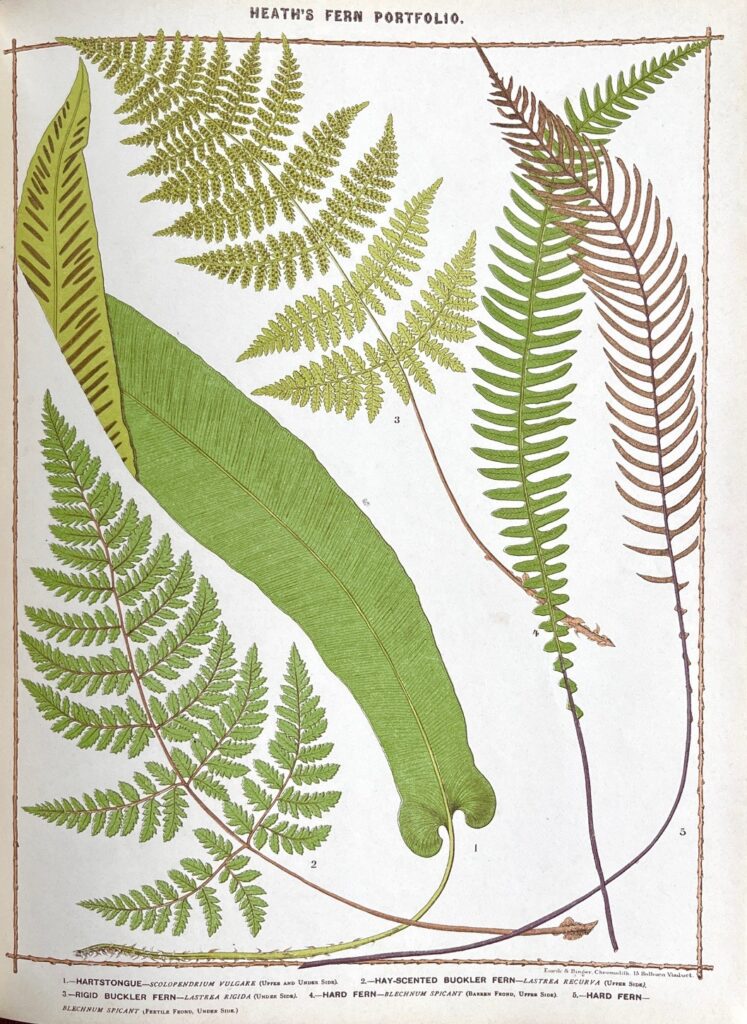
63673 [BOTANY — CHROMOLITHOGRAPHS]. HEATH, Francis George. The fern portfolio: all the species of British ferns are included in this volume. . . . London: Society for Promoting Christian Knowledge, [Emrik & Binger, Chromolithographers, 15, Holborn Viaduct], 1885. Folio. 12 x 15.5 in. [38 pp (unpaginated).] With 15 chromolithograph colour plates, each with facing text leaf. Olive-green pictorial publisher’s cloth, gilt decorative lettering front cover, British ferns depicted in green & black, decorative endpapers (minor edgewear, minor bumping to corners, head & foot of spine, slight occasional foxing), still a VG– bright copy. $750.00

First edition of this wonderful production by the noted British botanist, designed to depict all British fern varieties in nearly life-size formats through the chromolithography of Emrik & Binger. This was designed to serve as a key visual reference for the legions of specimen and herbarium collectors during the Victorian fern rage, or Pteridomania, where enthusiastic and often zealous collectors during the last half of the 19th Century filled ferneries, created fern cabinets, and herbariums. Ferns varieties illustrated within encompass Royal Fern, Broad Buckler Fern, Hartstongue, Mountain Buckler Fern, Holy Fern, Brittle Bladder Fern, and many others.
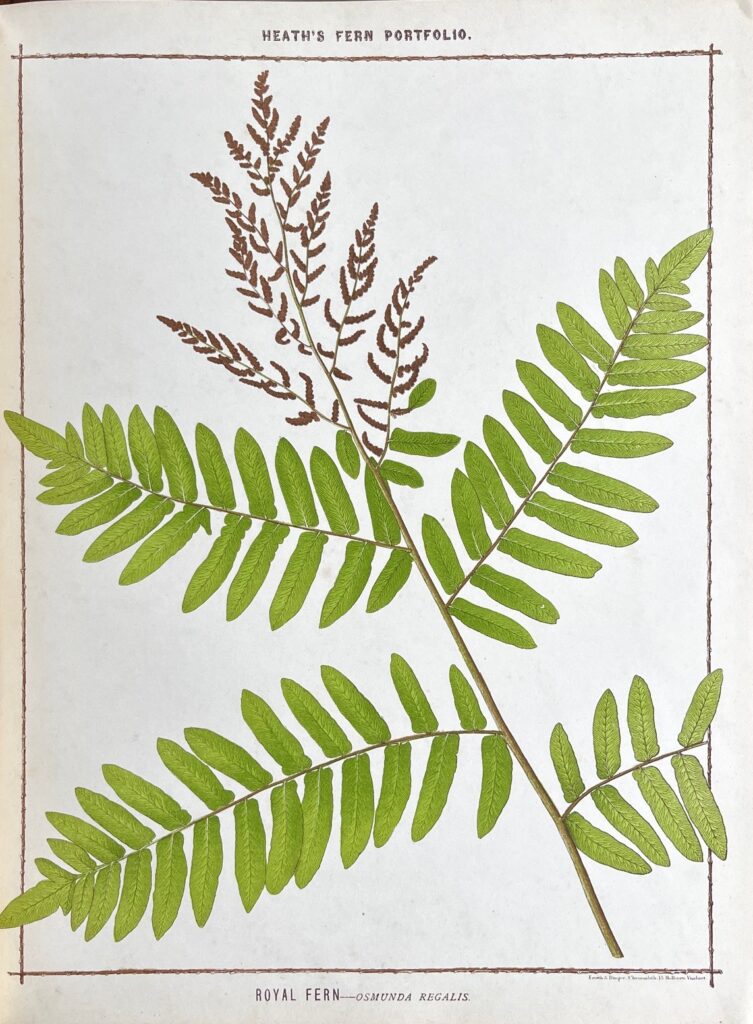
Heath (1843–1913) was a noted British botanist, civil servant, editor of Gilpin’s Forest Scenery, and a pioneering force in the Open space and Green Belt movements across Victorian England. Emrik & Binger produced chromolithographs & lithographs for very few British & European illustrated works, and are not included in Twyman’s A History of Chromolithography.

All images courtesy of Kol Shaver, Zephyr Used and Rare Books.

Where have you gone, Butch Cassidy?

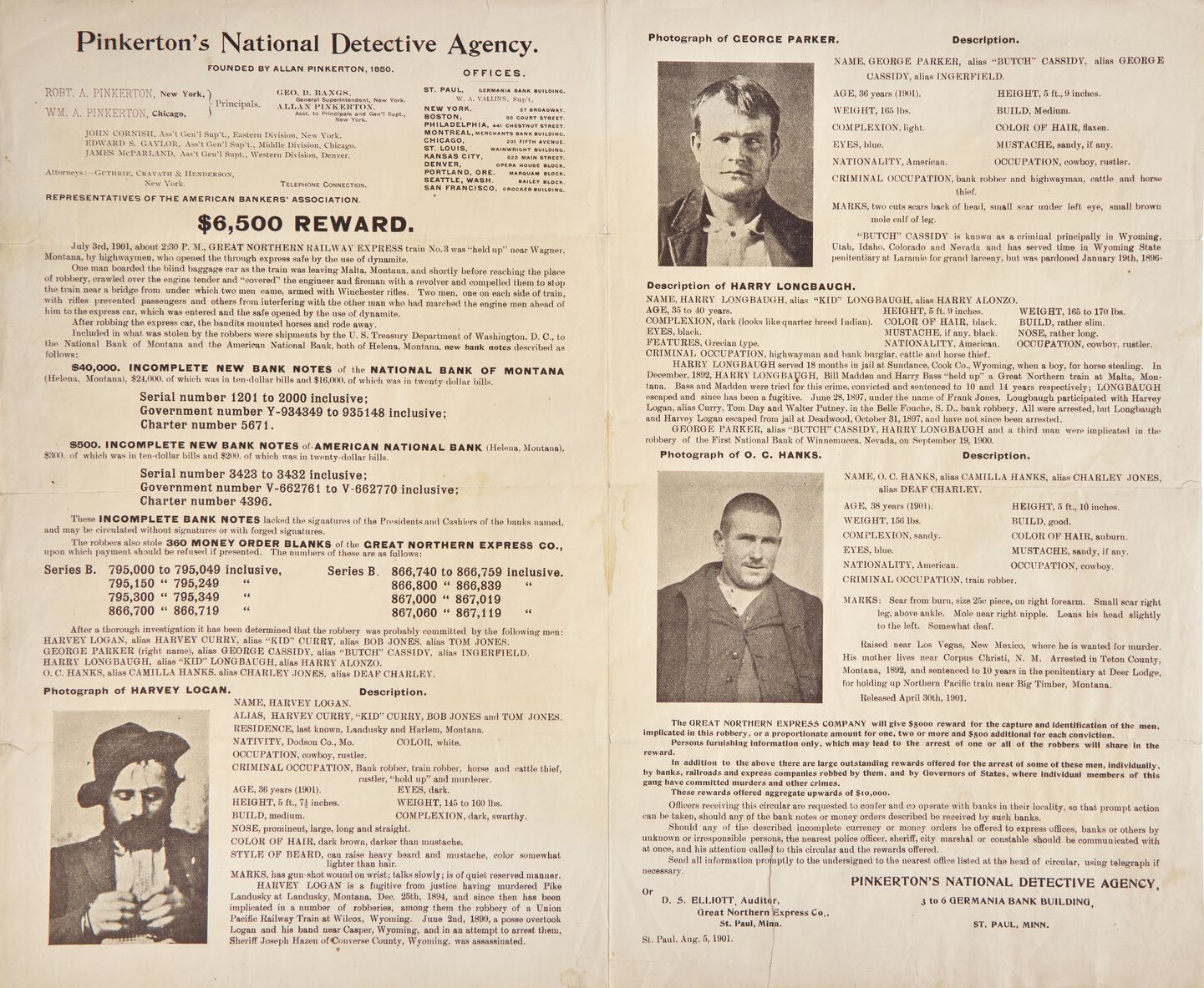
Just when I thought I’d said pretty much all I had to say (for now, anyway) about wanted posters, I’m eager to report that Freeman’s in Philadelphia (FreemansAuction.com), in their Printed and Manuscript Americana auction on January 29, will be auctioning a rare Pinkerton flyer for Butch Cassidy, Harry Longbaugh (aka the Sundance Kid), and other members of the so-called Hole-in-the-Wall Gang (alternatively the Wild Bunch—not to be confused with the Sam Peckinpah film), issued after the robbery of Great Northern Railway Express train no. 3 near Wagner, Montana, on July 3, 1901, in which $40,000 (almost $1.25 million today) was taken. The estimated hammer price for the flyer is $8,000 to $12,000.

From the Freeman’s Printed and Manuscript America auction on January 29 at 10 a.m. EST: [Wild West] Cassidy, Butch, and the Sundance Kid. Pinkerton’s National Detective Agency Wanted Poster for the Wild Bunch. Courtesy of Freeman’s, 2026. 

I find this exciting on so many levels . . .

For one thing, it’s not just one of the rare Pinkerton flyers for Butch and Sundance (who is not pictured); it’s an early example I’ve never seen before—circulated a good three years before the better-known one of November 14, 1904, issued after the gang knocked over the First National Bank of Winnemucca, in Winnemucca, Nevada.

I asked the great Marshall Trimball, former columnist for True West and my go-to authority for all things Old West, if he knew of this particular flyer; he told me he’d seen it in an old book some years ago—further evidence of the flyer’s rarity, because if Marshall Trimble has seen it only once, then there have gotta be precious few of them in existence.

For another thing, as readers of this blog already know, a 1901 wanted flyer with printed photos rather than affixed photos is really early.

As for the auction estimate: it beats the hell out of me. All I know is it’s out of my league. That said, a somewhat damaged example of this flyer came up in a Heritage auction in 2011 and sold for $14,340 with the buyer’s premium—and Heritage notes someone offered $19,000 for it in 2014. So Freeman’s estimate may be on the low side. (Incidentally, I note that an example of the more often encountered but still extremely rare 1904 flyer with the Sundance Kid’s photo sold in a Morphy auction on June 24, 2023, for $19,965, including the buyer’s premium.)

For those who would like a really interesting description of the train robbery that prompted the issuance of the 1901 flyer—which offers a $6,500 reward, incidentally—have a look at the listing for the auction lot at https://freemansauction.com/auctions/6465-printed-and-manuscript-americana/lot/152. The Freeman’s folks note that, “while this circular lists Butch Cassidy and the Sundance Kid as having participated in the July 3rd crime, there is debate as to whether one or both of them actually took part in the heist. Some accounts indicate that at the time of the crime they were in Argentina, having fled there earlier that year, while other accounts record them arriving there the following year, in 1902. Furthermore, the exact number of perpetrators or members who participated is unclear, and while this poster lists Cassidy, the Sundance Kid, Kid Curry, and Deaf Charley as the culprits, others such as Bill ‘News’ Carter and Ben Kilpatrick could also have participated.”

That’s one of the big things about the Butch Cassidy legend: where he was and when—and even if he was actually killed in the remote settlement of San Vicente, Bolivia (population 50 in 2001), on November 7, 1908, at age forty-two. Family members insist he survived the shootout and turned up in his hometown of Circleville, Utah, in the 1920s, but that’s another story.

What does seem to be widely accepted: Butch never killed anyone himself and was as smart, good-hearted, personable, and charismatic as the character portrayed by Paul Newman in one of the iconic “rebel” films of the 1960s.

Anyway, look for an update with the auction result on NorthwestCollector.com!

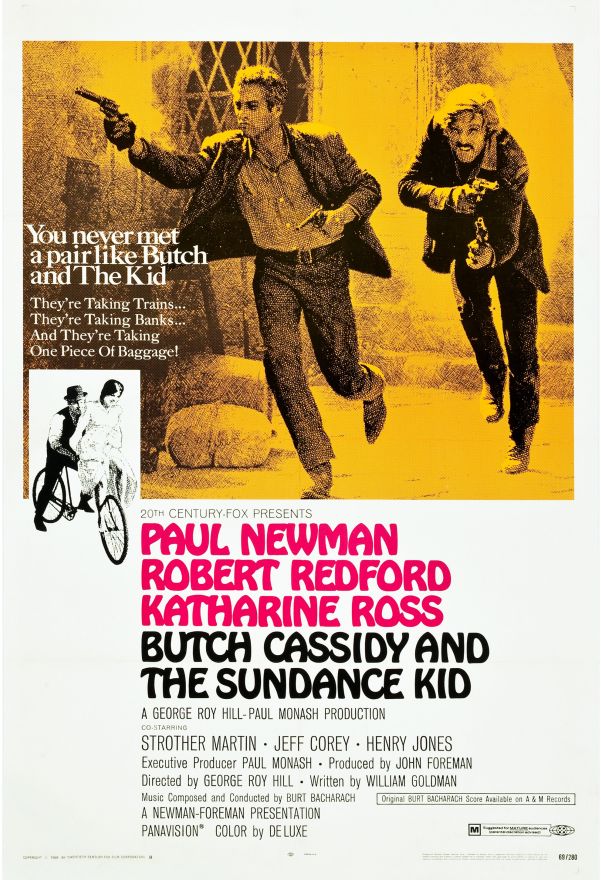
The 1969 film that made Butch and Sundance household names, directed by George Roy Hill, from a screenplay by William Goldman.

More on the return of Carlisle Indian School students’ remains

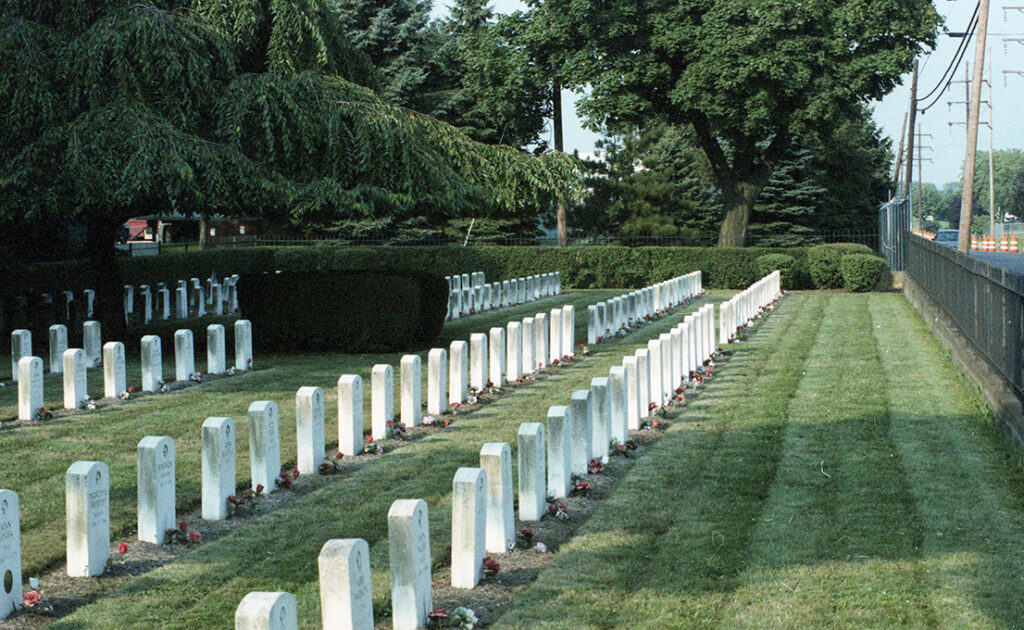
The Carlisle Indian Industrial School cemetery circa 1990. the cemetery was relocated in 1927. Image courtesy of Dickinson College Archives & Special Collections.

Here are the replies to a series of questions that I asked the Office of Army Cemeteries at the end of August regarding the return of the remains of students who died at the Carlisle Industrial School in Carlisle, Pennsylvania. My apologies for taking so long to post this: I received these answers in mid-September. Many thanks to Olivia Van Den Heuvel, public affairs specialist at Arlington National Cemetery, for facilitating this communication.

Northwest Collector: The supplementary information [in the Federal Register of March 3, 2025]* indicates that the disinterments are at the request of family members of the deceased students. Are the family members responsible for taking possession of the remains and reinterring them?

Office of Army Cemeteries: Families and tribes participate throughout the disinterment and return process by making key decisions on where the child will be returned to and permanently buried, as well as conducting cultural ceremonies and prayers, and formatting the final interment headstone. The Army funds the disinterment, transportation, and reinterment of the children.

Q: Can tribes request that remains be returned, or must the requests come from family members?

A: The Office of Army Cemeteries requires a notarized affidavit from the closest known living relative, often identified with tribal input, to comply with Army regulation regarding the disinterment of named remains in an Army cemetery. Determining a child’s closest living relative is at the discretion of the family and tribe. Kinship relations vary greatly across tribal nations and the Army does not dictate how families or tribes make that determination.

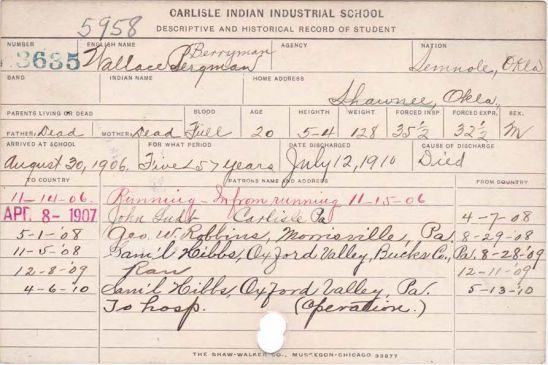
“Descriptive and Historical Record of Student” for Wallace Perryman (spelled “Berryman” here), a member of the Seminole Nation from Shawnee, Oklahoma. He entered the Carlisle Indian Industrial School on August 30, 1906, at age twenty. Both his parents were already dead. Perryman died on July 12, 1910, after surgery for an abdominal abscess. He was one of the Carlisle students whose remains were scheduled to be returned to his tribe. Image courtesy of the National Archives and Records Administration (NARA).

Q: How many other students’ remains have been returned so far, and how many graves remain?

A: As of October 2024, the Army has returned 41 children to their families and tribes. The Army is committed to this program and will continue to engage with tribes and families that request the return of their children from the Carlisle Barracks Post Cemetery. 

Prior to this year’s disinterment program, the cemetery contained 135 graves with Native American or Alaskan Native names, 34 graves belonging to military service members and their families, and 19 graves that are reasonably believed to contain the remains of unknown Native American or Alaskan Native children.

Q: Does the Office of Army Cemeteries have a procedure by which it reaches out to tribes to offer the return of remains?

A: The Army conducts robust nationwide in-person consultation with federally recognized tribes and families whose children are buried in the Carlisle Barracks Post Cemetery.

Q: Do tribes or families ever prefer not to have remains returned or don’t respond, e.g., out of respect for the dead or because the decedent’s family can’t be notified or can’t take possession of the remains?

A: There are a handful of tribes that have requested their loved ones remain in the Carlisle Barracks Post Cemetery at this time. Out of respect and privacy for those tribes and individuals, we will not provide further details. 

The Office of Army Cemeteries stands ready and willing to assist tribes and families requesting the respectful and dignified disinterment of their loved ones from the Carlisle Barracks Post Cemetery.

Q: Is there anything that the general public can do to help?

A: The Army is grateful to have the support of the public and the tribes throughout this program. We encourage the public to reach out to Dickinson College or Cumberland County Historical Society if they’d like to learn more about the Carlisle Indian Industrial School.

“The Army is honored to conduct the Carlisle Barracks Disinterment Program once again,” said Karen Durham-Aguilera, executive director of Army National Military Cemeteries and the Office of Army Cemeteries. “We are deeply grateful to the Seminole Nation of Oklahoma and the Cheyenne and Arapaho Tribes for their brave commitment to bring their loved ones home.”

Renea Yates, director of the Office of Army Cemeteries, added: “The Office of Army Cemeteries team truly appreciates each of these tribes for the kindness, courage and devotion they’ve shown throughout their journey to bring their children home. We recognize that this is no small undertaking, and we hope that our skilled team can assist in bringing a sense of peace and closure that these families deserve.”

* See “Notice of Intended Disinterment from Carlisle Barracks Post Cemetery,” https://www.federalregister.gov/documents/2025/03/03/2025-03357/notice-of-intended-disinterment-from-carlisle-barracks-post-cemetery.

REMEMBER THEIR FACES! Carlisle Indian School students’ remains to be disinterred, returned to tribes

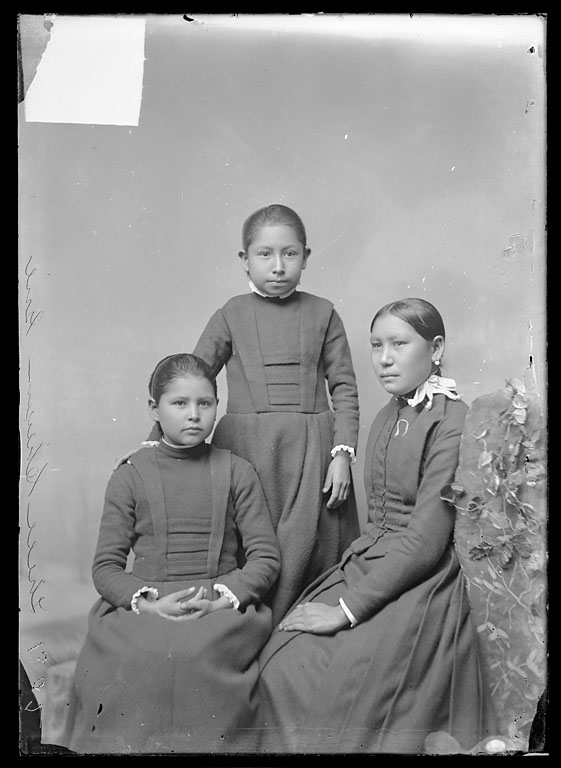
Lydia Gardner (Arapaho), Nannie Little Robe (Cheyenne), and Ethel Black Wolf (Arapaho), circa 1890. Nannie died on Friday, February 15, 1895, age 12. Her cause of death was recorded as pneumonia hydrothorax, or fluid around the lungs. Image courtesy of the National Anthropological Archives, Smithsonian Institution.

After well over a century, the remains of nineteen Native children and young adults who died at the Carlisle Indian Industrial School in Carlisle, Pennsylvania, will be disinterred, beginning tomorrow, September 3, and returned to the tribes they came from. One student was from the Seminole tribe; the other eighteen were from the Cheyenne and Arapaho tribes.

The students names are Wallace Perryman of the Seminole Nation of Oklahoma and Belle Cahoe, Wash E. He, Tabitha Carroll, Jane Lumpfoot, Leah Road Traveler, Percy Whitebear, George Harrison, Charles Whiteshield, Matavito Horse, Nannie Little Robe, Dora Morning, Louise Thunder, Giles Hands, Ruben Tanpeds, Henry Morning, William Sammers, Abraham Lincoln, and Elsie Davis from the Cheyenne and Arapaho Tribes.

This should be national news, yet I’m seeing very sparse recent coverage online. The most recent item I found was in the Carlisle, PA, Sentinel from August 4, 2025.1

I have been reaching out to the Office of Army Cemeteries (OAC) and the tribes involved to learn more about this, so consider this an ongoing story.

Henry Morning (Cheyenne) arrived at Carlisle in 1886. He died on March 28, 1889, age 16, his cause of death unspecified. Photo by John N. Choate, Carlisle, PA. Image courtesy of Cumberland County, PA, Historical Society.

Meanwhile, I searched the Carlisle Indian School Digital Resource Center database for images of the students who died. I found only two whose photos were identified. How heartbreaking is that . . .

According to the National Park Service, at least 168 students dies at the Carlisle Indian Industrial School between its opening in 1879 and its closure in in 1918: “Over ten thousand children attended Carlisle . . . with roughly 1,000 on campus in a given school year. They came from over 142 Indian nations. These nations had many different languages and cultures. Most students were Sioux, Chippewa, Cherokee, Cheyenne, Menominee, and Alaskan Native. Some students graduated in their late teens or early twenties but others left early due to illness or homesickness.”2

The Carlisle Indian School’s approach to educating a student, according to its founder, Captain Richard Henry Pratt, was “Kill the Indian in him, and save the man.”

Anyway, more to come.

Meanwhile, if you have unidentified images of Carlisle students, you can check the images on the Carlisle Indian School Digital Resource Center database at https://carlisleindian.dickinson.edu/.

Do you have confirmed images of any of the students named above? Do you own images of Carlisle students that you would like to donate to the Carlisle Indian School Digital Resource Center? If so, please contact Jim Gerencser, associate dean for archives and special collections at Dickinson College, in Carlisle, Pennsylvania, at cisproject@dickinson.edu.

Notes

  1. Naomi Creason, “Army to Disinter 19 Carlisle Indian School Students in September,” Sentinel (Carlisle, PA), August 4, 2025 (updated August 19, 2025), accessed September 1, 2025, https://cumberlink.com/news/local/article_f407ca3a-aa0a-4027-84da-b96297defd69.html. ↩︎
  2. “The Carlisle Indian Industrial School: Assimilation with Education after the Indian Wars (Teaching with Historic Places),” National Park Service, accessed September 1, 2015, https://www.nps.gov/articles/the-carlisle-indian-industrial-school-assimilation-with-education-after-the-indian-wars-teaching-with-historic-places.htm. ↩︎